Enchanted Rock · Enchanted Rock
Meteor nights on the granite
A wide sky, a dark one and a slab of warm rock to lie on: Enchanted Rock gives a meteor shower almost everything it asks for, if you plan around the crowds.
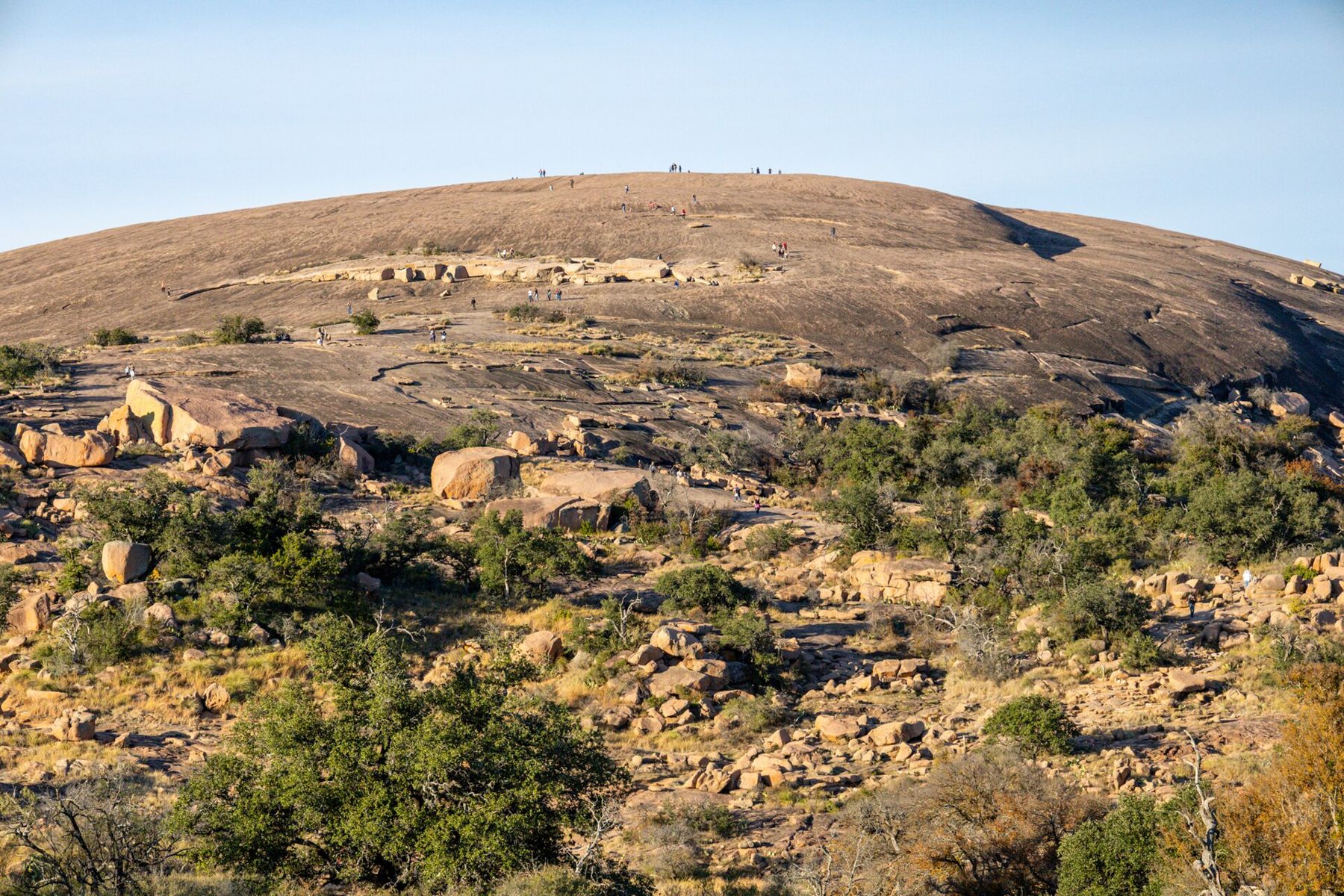
Meteors ask for almost nothing. No telescope, no binoculars, no skill with star charts: only a dark sky, a wide view of it, a few hours and a comfortable place to lie down. Enchanted Rock offers all four. The pink granite dome north of Fredericksburg is an International Dark Sky Park, and on the big shower nights of the year its broad, gently curving slopes are one of the best places in central Texas to watch the sky fall in streaks.
This covers the showers worth planning for, how a radiant works, and how to share the rock on a night when plenty of other people have the same idea.
Why the granite suits a meteor night
Meteors can appear anywhere in the sky, so the more of it you can see, the more of them you catch. The lower slopes and shoulders of the dome open wide stretches of sky with no trees in the way, and the rock itself tilts you back toward the zenith as if it had been shaped for the job. On summer nights the granite gives back the heat it soaked up during the day, so the first hours on the rock feel warm through your clothes.
Darkness matters as much as width. Most meteors in any shower are faint, and every step from a suburban sky to a truly dark one adds faint meteors to the count. A shower that shows a handful an hour from a city park can show several times that here, especially once the brightest glow on the horizon is behind you.
Three showers worth the drive
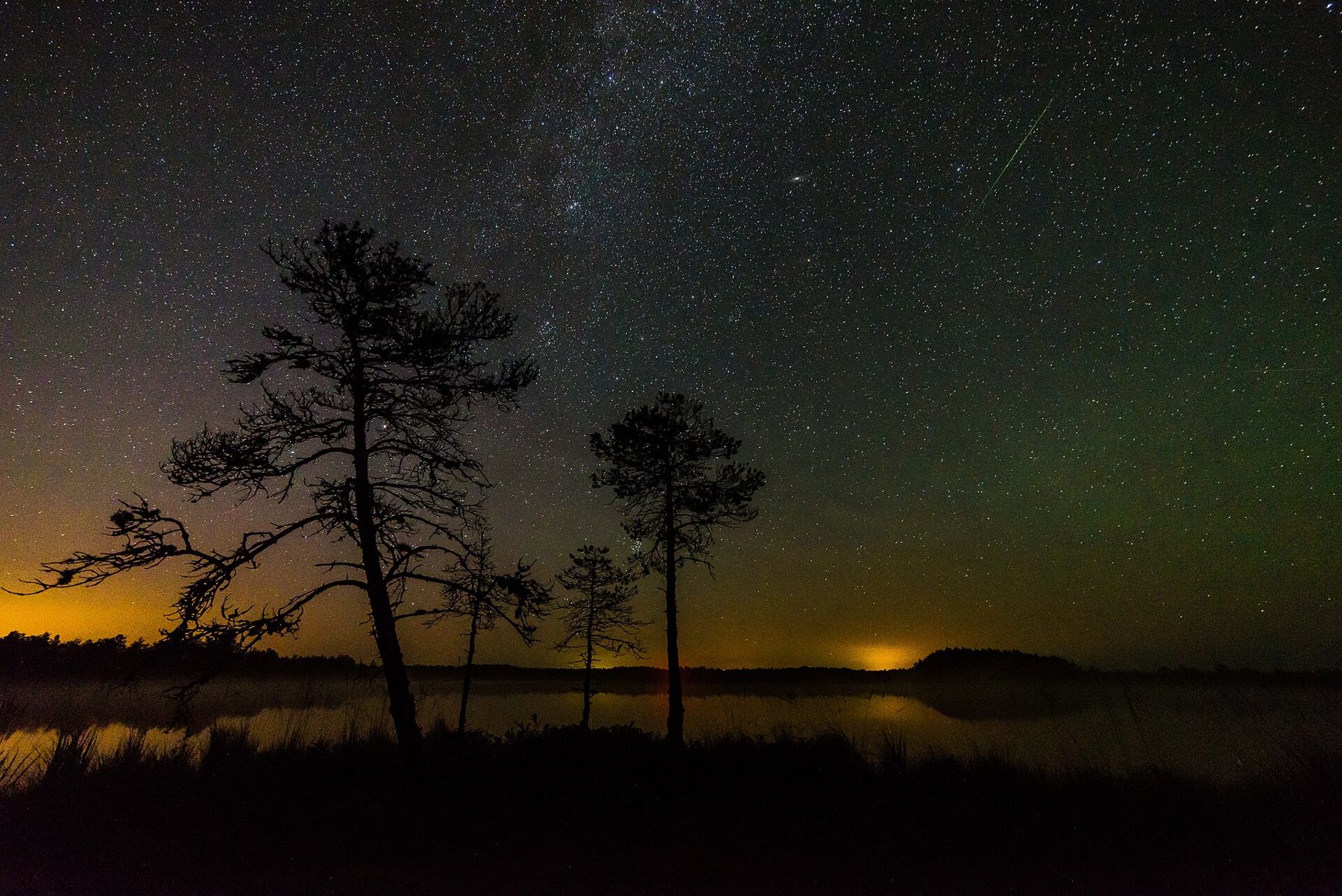
Showers return on about the same dates every year, because the Earth crosses the same streams of comet and asteroid dust at the same point in its orbit. The exact peak shifts by a day or so from year to year, so check the dates and the moon before you go.
Perseids, in mid-August
The best-known shower peaks around the twelfth and thirteenth of August, with useful nights for several days either side. Its meteors are fast and often bright, and some leave glowing trails that hang for a second or two. The radiant in Perseus rises in the northeast in the late evening and climbs all night, so the real show starts after midnight and builds toward dawn. August nights in the Hill Country are warm, which makes this the most comfortable shower of the year on the rock.
Geminids, in mid-December
The Geminids, peaking around the thirteenth and fourteenth of December, are often the richest shower of the year. The radiant near Castor in Gemini is well up by mid-evening, so you do not have to wait for the small hours, and the meteors tend to be slower and easier to follow than the Perseids. The price is the cold. Bare granite on a December night pulls heat out of you quickly, and the warmth the rock held in August is long gone.
Leonids, in mid-November
The Leonids peak around the seventeenth and eighteenth of November. In most years they are modest, a meteor every few minutes at best once the radiant in Leo has risen after midnight. They are famous for rare storms, when thousands an hour have fallen, roughly in step with the thirty-three-year orbit of their parent comet. A normal year is a quiet, chilly vigil, best for patient watchers who enjoy the late autumn sky for its own sake.
TX-4 · South Llano RiverSetting up a small telescope on the river flatsRadiants, and where not to look
Every meteor in a shower seems to fly away from one small patch of sky, the radiant. The particles travel on parallel paths, and perspective makes them appear to spread from a single point, the way the rails of a long straight track seem to meet in the distance. Trace a meteor backward and, if it belongs to the shower, it points home to the radiant.
That does not mean you should stare at it. Meteors close to the radiant are short, because they are heading almost straight toward you. The long, graceful ones appear well away from it. Face a dark part of the sky with the radiant somewhere off to one side, and let your eyes rest on a broad patch rather than a single star.
The higher the radiant, the more meteors you see. Soon after it rises, a few long earthgrazers skim almost level across the sky, which are lovely but rare. The count climbs as the radiant gains height, which is why the hours before dawn are usually the best.
Lying back on the rock
Comfort decides how long you last, and how long you last decides how many meteors you see. A closed-cell foam pad takes the edge off the granite, and a reclining chair works where the ground is flat enough. Choose a gentle slope, lie with your head uphill, and point your feet toward the darkest part of the sky.
- Bring a blanket even in August, because the rock cools as the night goes on.
- In December, add a sleeping bag, a hat and a hot drink.
- Keep your phone in a pocket. One glance at a bright screen costs you the faint meteors for several minutes.
- Watch in pairs and call them out. Half the pleasure is the shared gasp at a bright one.
Pick your spot before dark. The dome has steeper drops than it seems from below, and a sleepy roll in the wrong direction on smooth granite is no joke. Settle on a broad, gentle area well back from any edge.
Crowds, parking and the clock
Enchanted Rock is one of the busiest state natural areas in Texas, and a famous shower falling on a weekend draws a crowd. The park limits how many vehicles it lets in, day passes can be reserved in advance, and on busy days the entrance closes to new arrivals once parking is full. Book ahead and arrive with daylight to spare.
The harder question is time. A shower usually peaks after midnight, while day-use visitors must leave by a set hour, and only people with an overnight reservation in the park's designated areas may stay later. Check the current closing time and rules before you plan your night. If you cannot stay late, the Geminids suit you best, because their radiant is already up in the evening. The habits from the walk down from the summit with a red lamp serve just as well on a meteor night.
A bright moon on peak night hides all but the brightest meteors. In those years, watch a few nights before or after the peak, when the moon is out of the way, since the major showers stay active for days.
Ground that stays off limits
The granite looks bare and tough, but parts of it are fragile. Shallow weathering pits on the dome fill with rainwater after storms and hold small plants and tiny freshwater shrimp that depend on those brief pools. Step around them, and never sit or lie in them, wet or dry. Some areas of the park are closed to protect plants or wildlife, and they are marked. Stay out of them in the dark too, however inviting the rock looks.
Keep your light red and low, and keep car headlights out of other people's eyes when you arrive and leave. The glow of the big cities sits low in the east and south, so lie with your feet toward the north or west if you can, and read up on which way to face to dodge the city glow. On an autumn evening before a shower gets going, look high in the northeast for the faint oval of the Andromeda Galaxy while you wait.