Copper Breaks · Copper Breaks State Park
Big skies on the Rolling Plains
South of Quanah, the Pease River has carved red mesas and juniper breaks out of the plains. Copper Breaks State Park sits in the middle of it, under a sky that runs all the way to the ground.
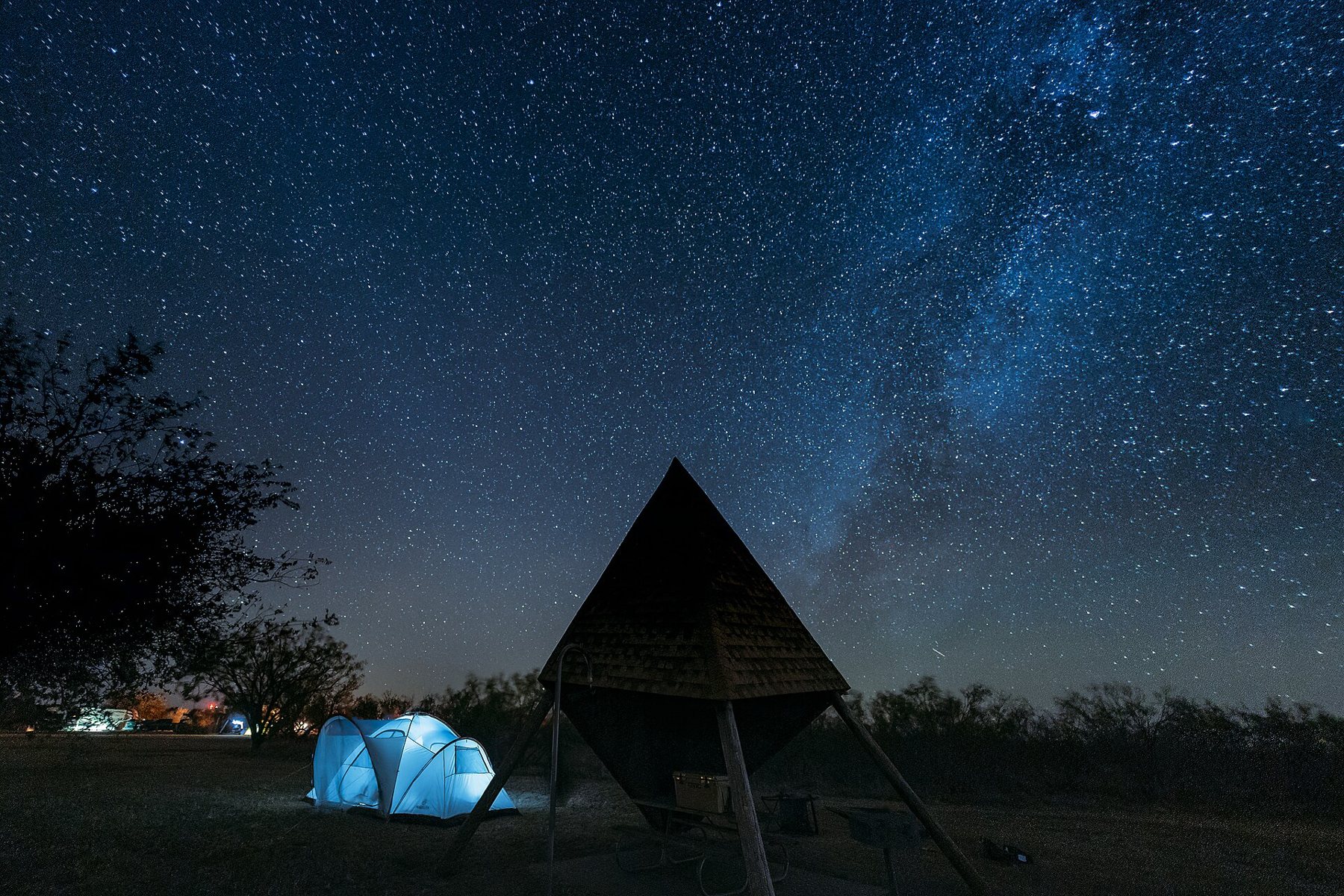
The drive north into the Rolling Plains is a lesson in horizon. Cotton fields and wheat give way to mesquite pasture, the land swells and dips in long waves, and the sky grows until it seems to fill three quarters of the view. Then, south of Quanah, the ground breaks open. The Pease River has cut through the plains here, leaving red clay slopes, mesas capped with pale rock and slopes dotted with juniper. Copper Breaks State Park lies in the middle of that country, and it is an International Dark Sky Park.
This is a place for the whole sky at once: horizons, rising stars and the big slow wheel of the night over open land.
Red ground under a wide sky
The park takes its name from the breaks, the rough, eroded land along the river, and from the traces of copper ore found in the red clay of the region. Its colors are strongest at the ends of the day, when low sun turns the clay slopes deep orange and red and the junipers throw long shadows down the gullies.
The Pease River runs through the park as a wide, sandy channel, often shallow, sometimes nearly dry, sometimes running high and muddy after storms. Two small lakes add water and birds. Trails climb over the mesas and through the breaks, giving short walks to high ground with views across the river valley.
Walk one of them before sunset. On high ground you learn where the land falls away, which way the river runs and where the darkest parts of the horizon lie. After dark, that knowledge is worth more than any map.
Horizons that let the stars in
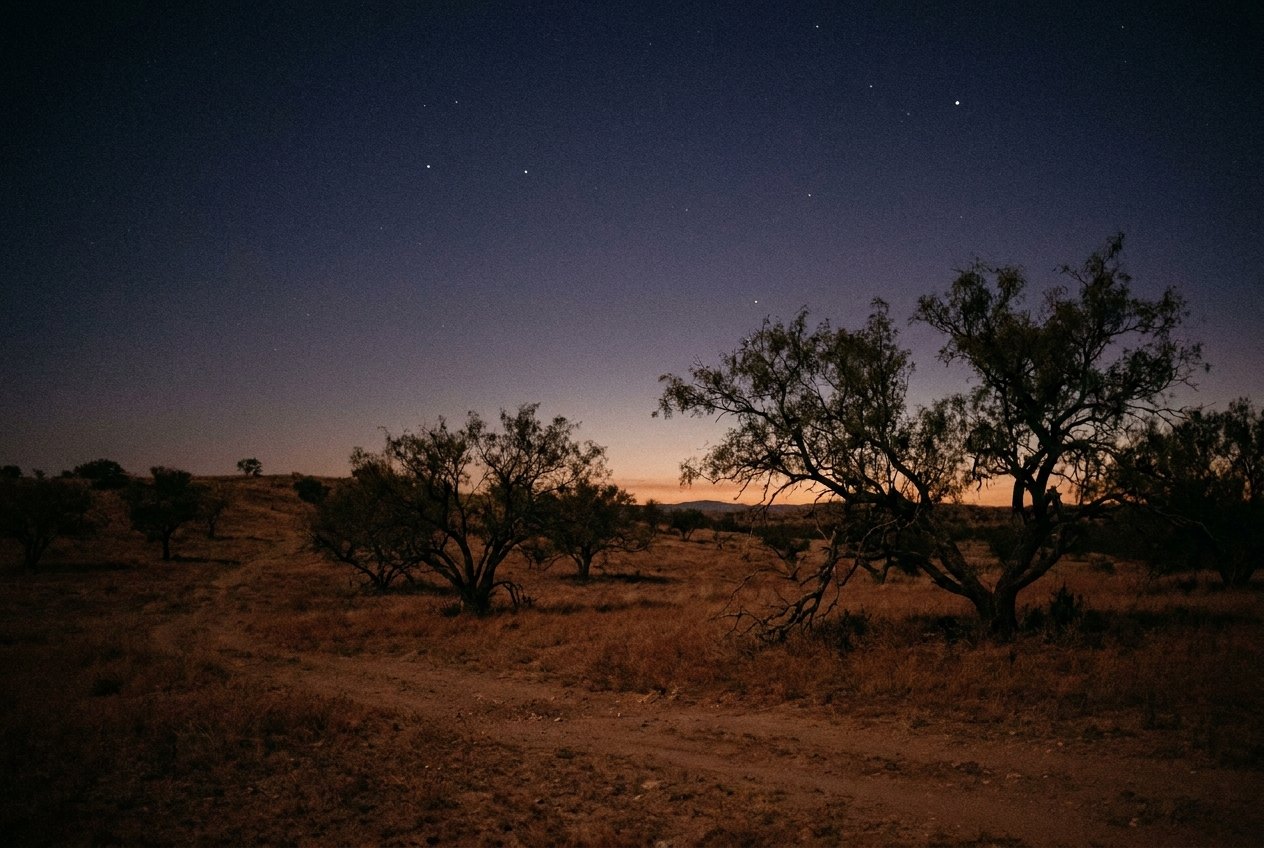
In the mountains of West Texas the peaks frame the sky. Here, almost nothing does. From the higher ground in the park, the horizon is low and level in most directions, and that changes the way you watch the night.
You see stars rise. On a clear evening, watch the east and you can catch a bright star coming up off the edge of the land, flickering and reddened by the long path through the air before it climbs and steadies. The same happens in reverse in the west. Planets and the moon rise and set the same way, and a moonrise over the plains, huge and orange, is worth an evening of its own before the dark nights of new moon.
Low southern stars become visible too. Copper Breaks lies far enough south that, on a crystal-clear winter evening, Canopus, the second-brightest star in the night sky, can creep just a few degrees above the southern horizon. You need a flat, open view to the south, very clear air and some luck. In summer, the whole of Scorpius stands clear of the skyline, tail and all, with the core of the Milky Way rising above it.
Zodiacal light favors flat horizons as well. On spring evenings after twilight, look west for a faint, tilted cone of light rising along the path of the planets; on autumn mornings, look east before dawn.
This is a place for the whole sky at once: horizons, rising stars and the big slow wheel of the night over open land.
The longhorns and the night
Copper Breaks keeps part of the official Texas Longhorn herd, the state's own living link to the cattle drives of the nineteenth century. The animals graze in their pastures within the park, and seeing them in low evening light, horns spread wide against the red ground, is one of the quiet pleasures of a visit.
Treat them as the large animals they are. Watch from the road or from outside the fence, keep children and dogs close, and never approach or feed them. After dark, longhorns, deer and other wildlife may stand on or beside park roads, so drive slowly with your eyes on the road edges.
TX-5 · Copper BreaksSpring winds, and how to keep a tripod stillWildlife of the plains is part of the night too. Coyotes call from the breaks, owls hunt over the grass, and on warm nights rattlesnakes are active. Walk with a red light pointed at the ground, and step where you can see.
When the park keeps the lights low
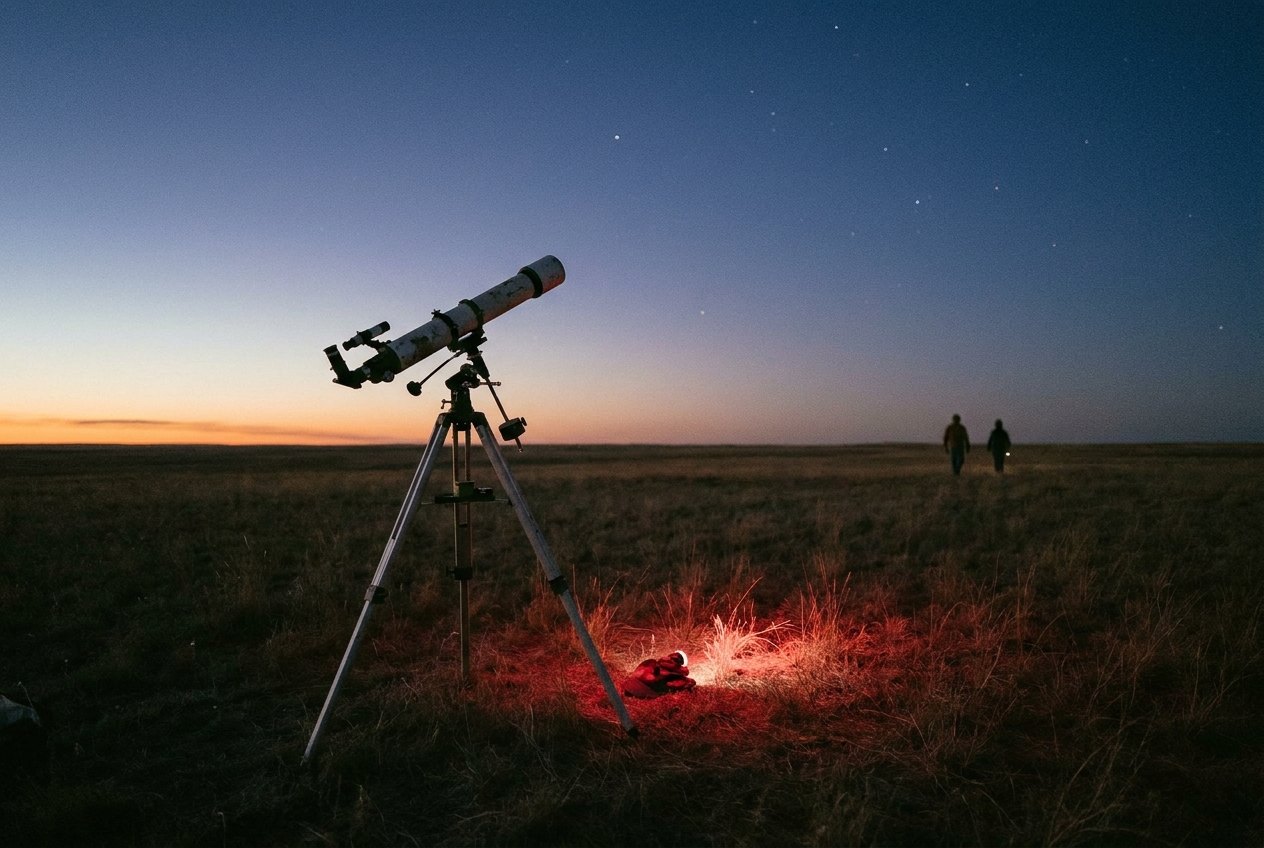
Being a dark sky park means more than a dark location. The park shields its outdoor lights, asks visitors to keep theirs down, and holds star parties and night sky programs on some evenings, often around new moon. These are a fine way to start, with telescopes set up and someone to point out the constellations. Dates and times change, so check the park's events listing before you go.
On any night, follow the same courtesy. Use red light only, keep it dim, and switch it off when you do not need it. Park with headlights pointed away from where others are watching, and close car doors gently. Gate hours, after-dark access and overnight rules all need checking ahead of time.
If you want something to aim for, autumn is a fine season here. The air is often dry, the nights are mild, and the Andromeda Galaxy climbs high overhead in the evening, where the dark sky shows it plainly by eye.
Weather that rolls in across the plains
The Rolling Plains have big weather to match their big sky. In spring and early summer, thunderstorms can build quickly over the open country, and some of them become severe, with hail, damaging wind and tornadoes. Check the forecast on the day and again before dark, and know where you would go if a warning were issued.
The open horizon has a gift here too. A storm a hundred miles away can light up the edge of the sky with silent flashes while the stars stay clear above you. Enjoy it from where you are, and keep an eye on whether it is moving your way.
Wind is the other constant. Gusty days are common, especially in spring, and the plains offer little shelter. If you plan to photograph the sky or use a telescope, read spring winds and how to keep a tripod still first. In winter, northers can drop the temperature sharply within an hour, so bring more layers than the afternoon suggests.
A long drive to a dark place
Copper Breaks is far from the big cities, which is the point. Quanah is the nearest town for fuel and supplies, and beyond it the roads run long and empty. Fill the tank, carry water and food, and plan the drive in daylight if you can.
The reward is a sky as broad as any in Texas. It is a different kind of darkness from the mountain basin of a first night in the Chisos Basin or the granite dome near the Hill Country cities, where you have to learn which way to face to dodge the city glow. Here you can face any way you like.