Enchanted Rock · Enchanted Rock
The summit of Enchanted Rock at blue hour, and the walk down by red light
A great pink granite dome rises over the Hill Country north of Fredericksburg. Climb it late in the day, stay for the blue hour, and come down with your night vision intact.
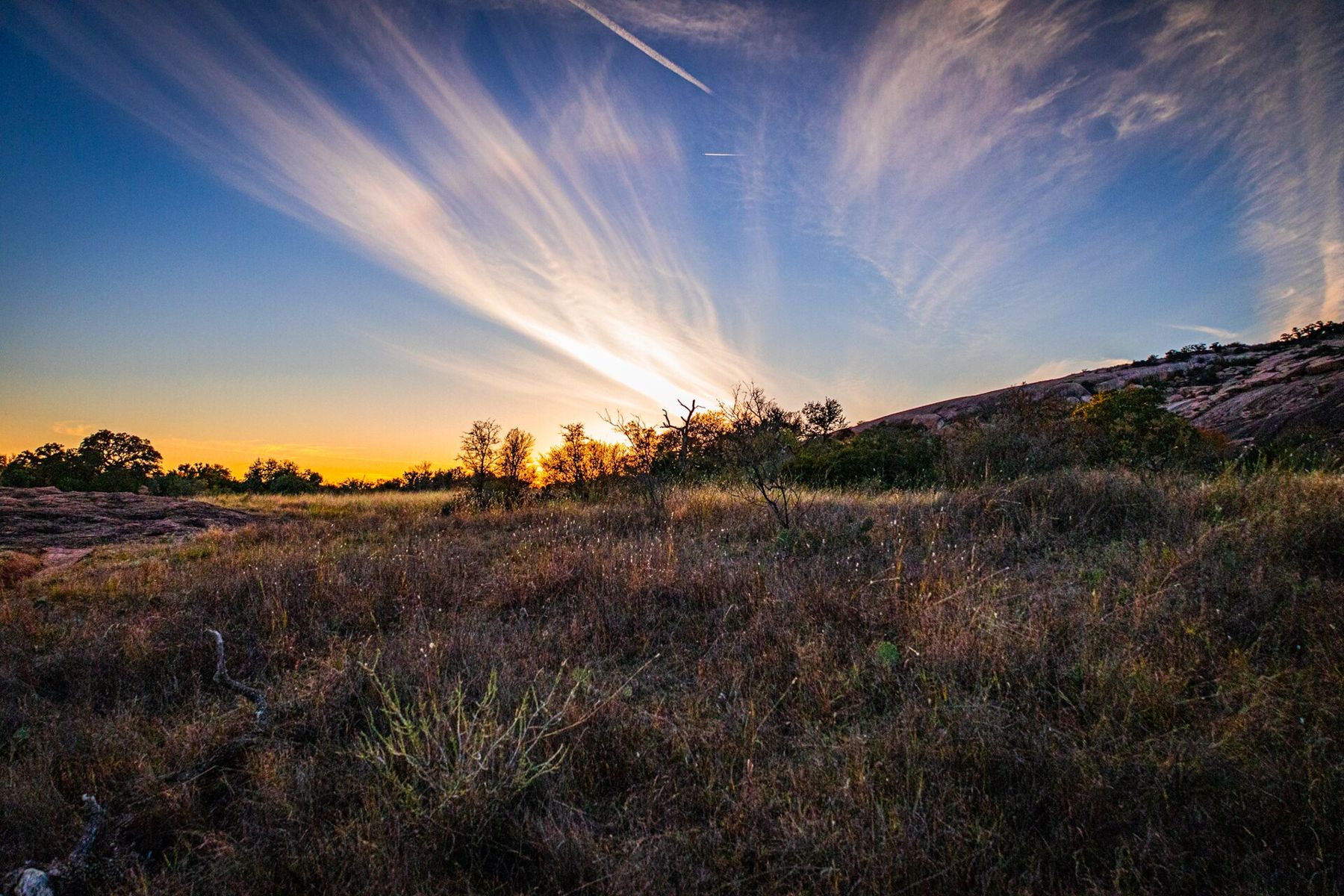
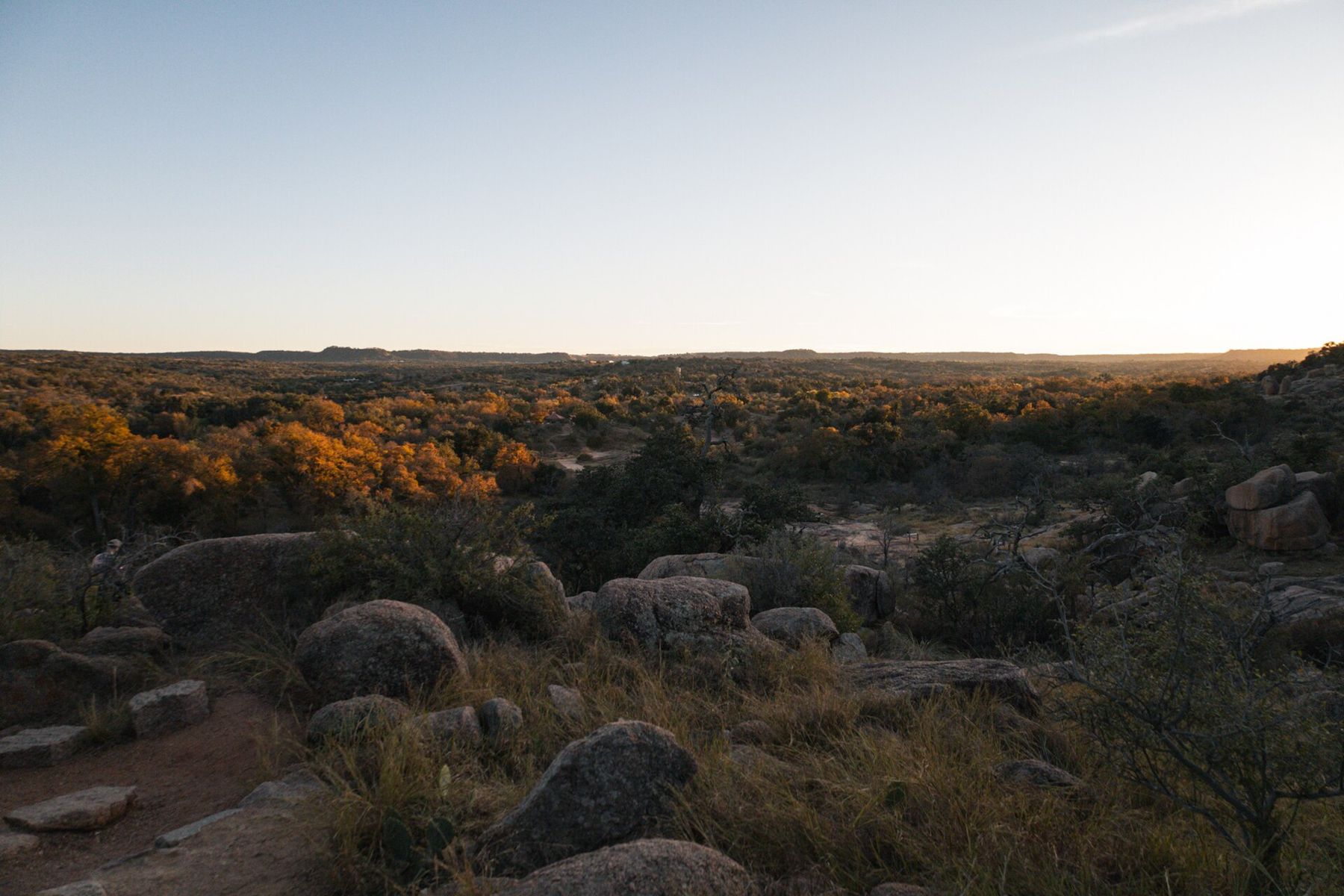
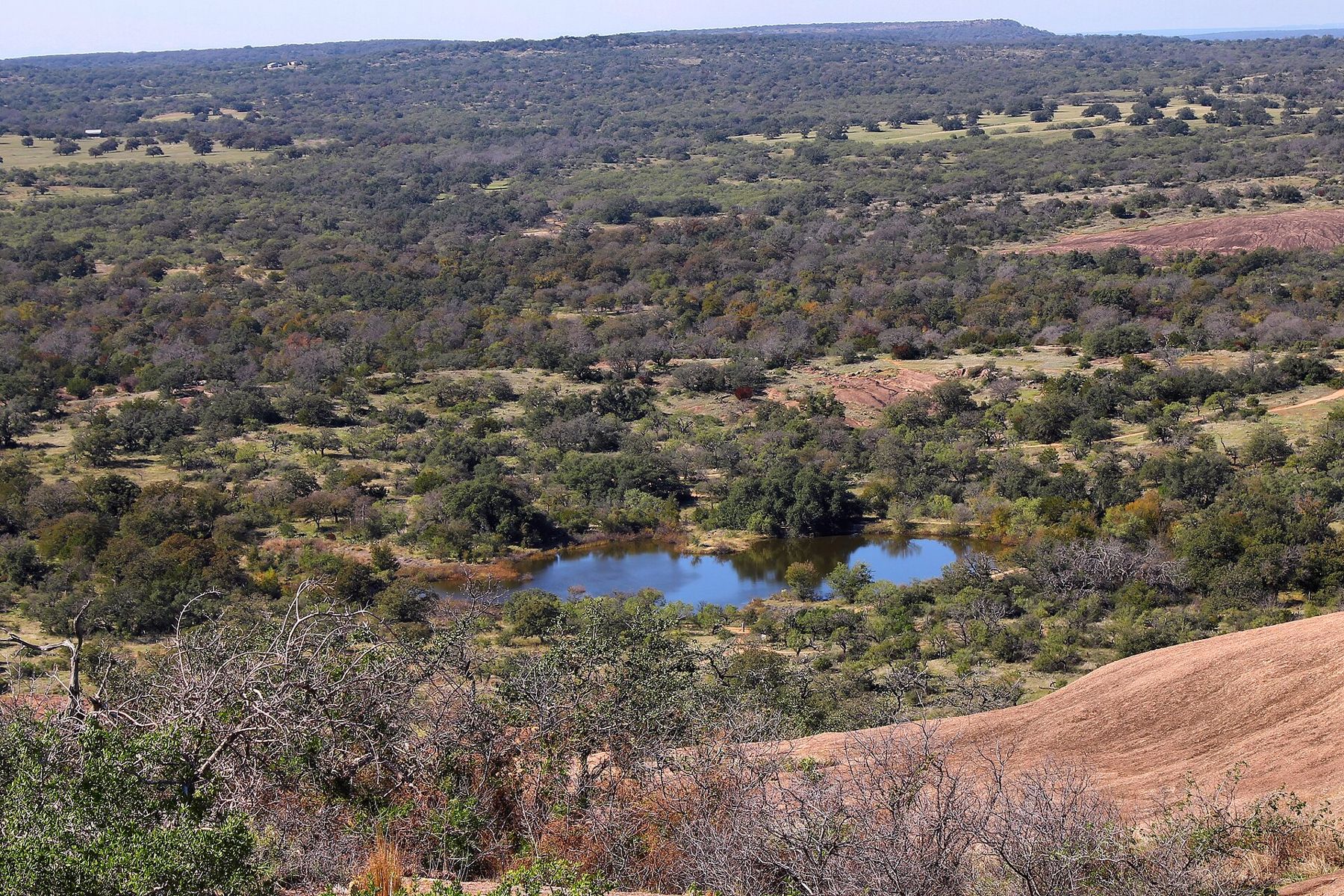
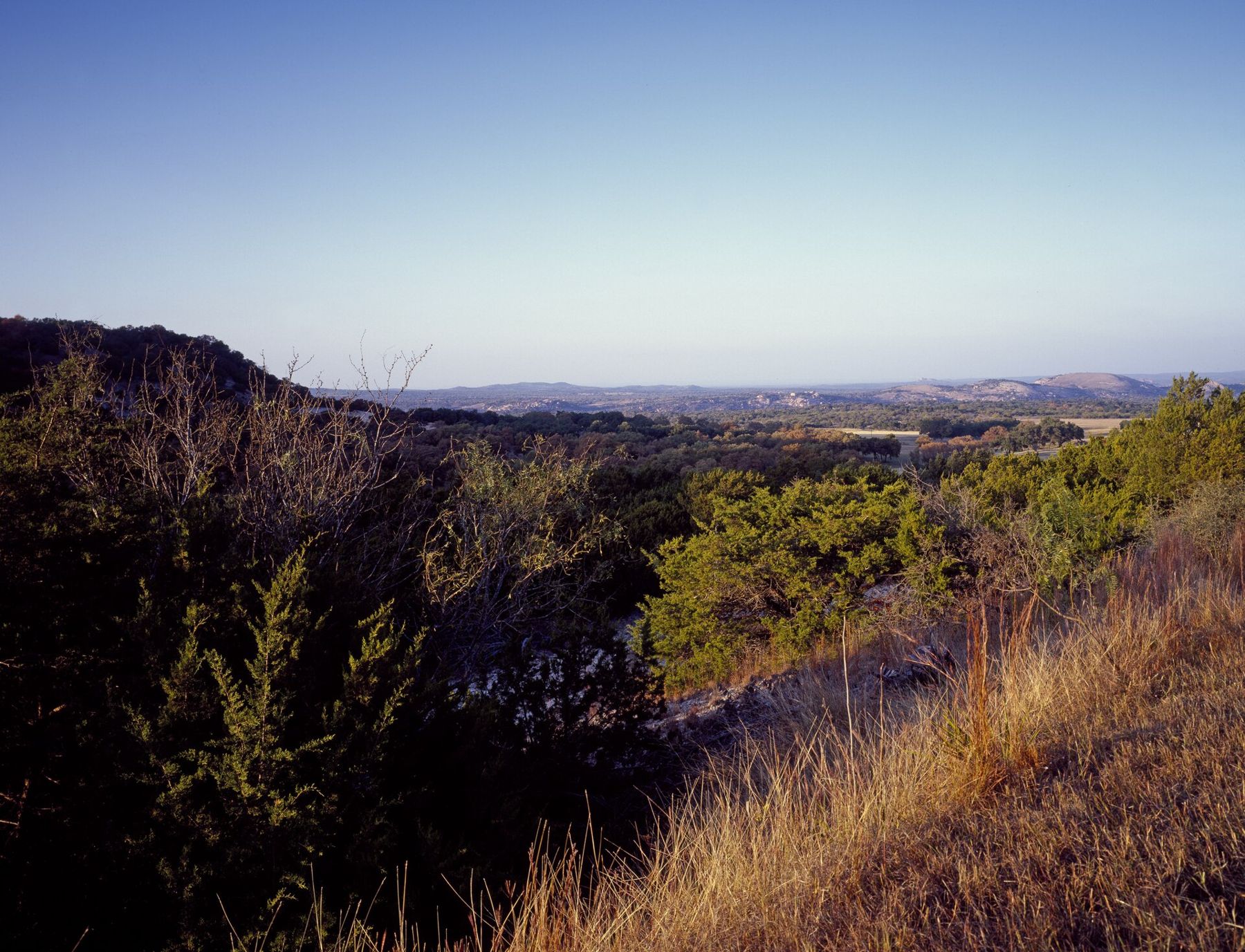
Enchanted Rock rises out of the Texas Hill Country like the top of a buried planet, a smooth dome of pink granite standing about 425 feet above the surrounding land. It is one of the largest exposed granite domes in the country, and from the top you look out over oak woodland, other granite knobs and long views toward Fredericksburg and Llano. Enchanted Rock State Natural Area is also an International Dark Sky Park, which makes the hour after sunset here something special.
This is about climbing the dome late in the day, watching the sky change from the summit, and coming down safely without spoiling your eyes for the stars.
A pink dome above the Hill Country
The rock is the exposed top of a mass of granite that cooled deep underground long ago and has since been uncovered by erosion. Its surface peels away in sheets, like the layers of an onion, which is part of why the dome is so smooth and rounded.
The rock also makes noises. On cool evenings after a hot day, the granite contracts as it loses heat, and people have long reported creaking and groaning sounds from it. Those sounds gave rise to stories about the place and probably to its name.
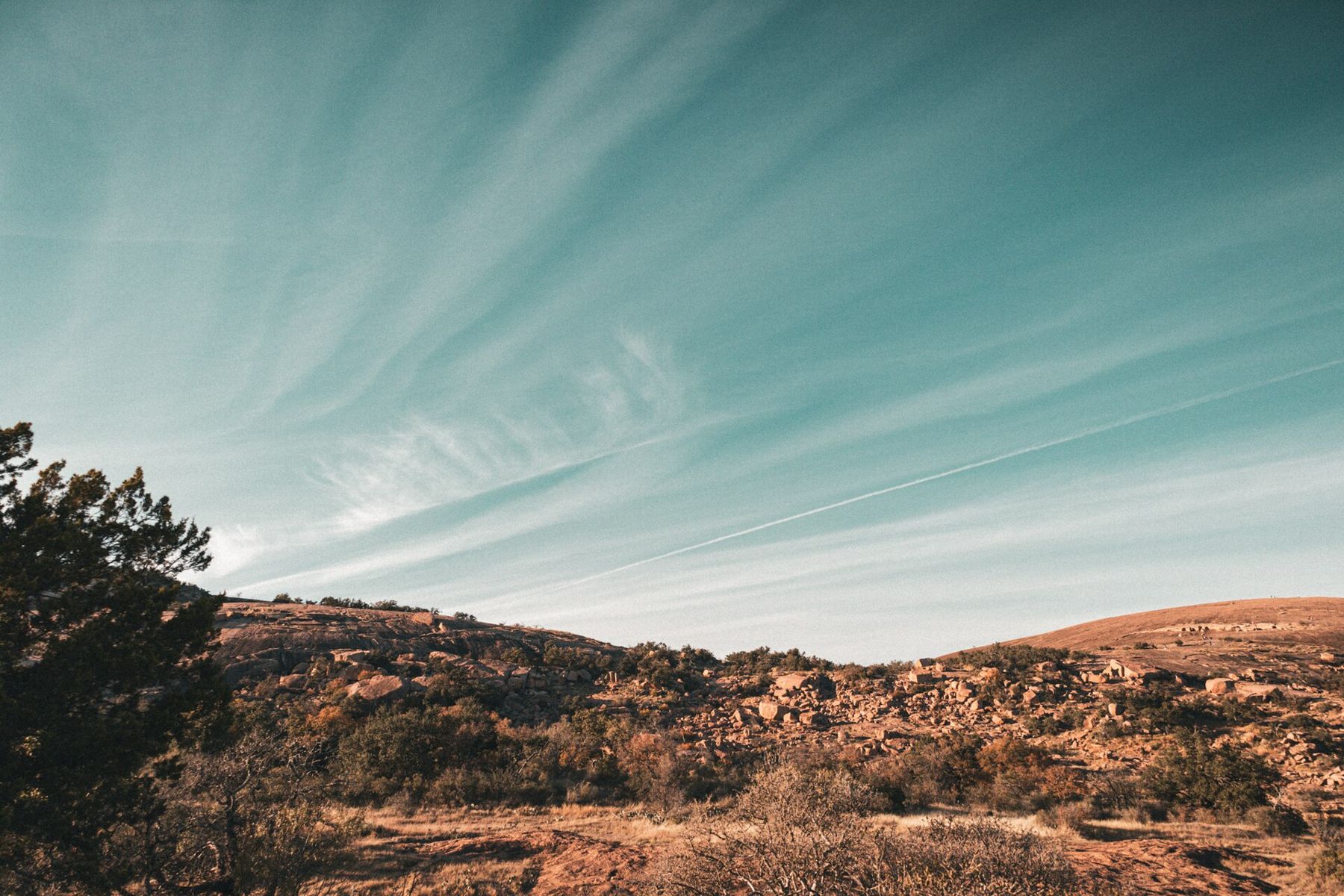
The Summit Trail is the most direct route to the top. It is short, about six-tenths of a mile, but steep, climbing over bare granite most of the way. Most people reach the top in under an hour with stops to catch their breath.
Reaching the summit before the light goes
Enchanted Rock is popular, and on busy days the park fills and the gate can close to new arrivals. Day passes can be reserved in advance, and booking ahead is the surest way in. Gate times, closing hours and the rules on staying after dark change, so check them before you go and plan to be off the rock and out of the day-use area on time. Overnight stays are only possible in the park's designated areas.
Aim to reach the summit well before sunset. That gives you time to rest, find a sheltered spot out of the wind and watch the light change across the Hill Country. Bring water even on cool days; the granite holds heat and reflects the sun.
The season changes the plan. From late autumn into early spring, the sun sets early, the air is often clear and dry behind cold fronts, and the climb is pleasant in the cool of the afternoon. In summer, sunset comes late and the rock can be fiercely hot well into the evening, so carry more water and climb slowly. Whatever the month, the summit is exposed. Wind that you barely noticed at the trailhead can be strong and cold on top once the sun has gone, so pack a warm layer and a hat in your bag.
What the sky does after sunset
Once the sun has set, turn around and face east. A dark blue-grey band rises slowly from the horizon. That is the shadow of the Earth itself, cast on the atmosphere. Just above it, a pink glow called the Belt of Venus lights the sky where sunlight still reaches. As the sun sinks lower, the shadow climbs and the pink fades.
Meanwhile, in the west, the afterglow deepens from orange through gold to a clear, deep blue. That is the blue hour, the short time when the sky is darker than day but still bright enough to show the shape of the land. It does not last a full hour; it can be over in twenty minutes or so.
TX-3 · Enchanted RockWhich way to face at Enchanted Rock to dodge the city glowBlue hour is also a gentle time for photographs. The sky still holds enough light to balance the dark shapes of the granite, so a phone or camera on a steady surface can record the deep blue, the first planet and the outline of the knobs without any artificial light at all. Brace against the rock or use a small tripod, and keep the exposure short.
Planets often appear first. Venus, when it is an evening object, shines low in the west before anything else. Jupiter and Saturn may also be up, depending on the year. Then the brightest stars come through, one by one, and the familiar patterns start to assemble.
Some nights, a glow on the horizon in the southeast and east comes from the cities to the south and east. Learn to recognize it and you can look the other way; there is more on which way to face to dodge the city glow.
The walk down with a red lamp
The descent is where people get hurt. The granite is steep, and in fading light it is hard to judge distances. If the rock is damp from rain or dew it can be slippery. Start down while there is still some light in the sky, and take your time.
Use a red light. Your eyes take a long time to adapt fully to the dark, and white light undoes that in moments. Red light disturbs that adaptation far less, so you keep your view of the stars while you watch your step. A headlamp with a red mode leaves your hands free. Keep it dim and pointed at the ground a few steps ahead, not out across the rock where others are walking or watching.
Stay on the route you came up, follow the trail where it is marked, and keep away from the edges of the steeper slopes. Rattlesnakes are active on warm evenings, especially near the boulders and brush at the base of the dome.
Your eyes take a long time to adapt fully to the dark, and white light undoes that in moments.
Staying for the dark
From the base, if your plans allow you to stay, the full night sky takes over. The dark sky park designation means the area is protected from much of the artificial light that brightens the Hill Country. In late summer the Milky Way stretches from the south up through the zenith. In winter, Orion rises in the east soon after dark.
For a night that goes beyond twilight, look at meteor nights on the granite, when people stretch out on the warm rock and watch the sky. If you have a small telescope, setting up on the river flats at South Llano River State Park is a quieter option farther west. And if blue hour makes you want to photograph the sky, try the Milky Way over Santa Elena Canyon in Big Bend.